

The Tinkuy Program is for Indigenous educators and cultural leaders to enable them to develop educational programs that support their unique culture, language, traditions, and spirituality and who would like to integrate the developmental principles and holistic practices of Waldorf education into their schools. The program is also open to non-Indigenous Waldorf teachers who are in alignment with our intentions, value diversity, want to deepen their understanding of Indigenous cultures, and are seeking ways to reorientate their teaching practices and curriculum toward a non-Eurocentric perspective.
Tinkuy is a term from Quechua cosmology expressing the sacred meeting point between complementary forces and the dynamic moments and locations where paired opposites converge. “Encounter” and “convergence” are often used to interpret this expansive concept into English. Tinkuy expresses the intentions of this program – where Indigenous wisdom and traditions, and the principles of Waldorf education converge for the benefit of all children and their capacity to inspire the future of our planet and society.
Program Structure

Module 1 April 2027
A School is a Center of Unique Culture
Creating a learning environment for children that embodies and supports the unique Values and Perspectives of their own Community.
Schools should embrace and teach the values and traditions of their culture and not be isolated islands within the community that do not value or recognize the specific wisdom and teachings of the community. Children should be able to see themselves, their parents, and ancestors as intelligent, honorable, and wise and to not be subjected to discrimination according to other cultural perspectives. For Indigenous people, schools have been places of colonialization and racism—where their own culture and beliefs were undermined and devalued.
As we move into the 21st century and a global world view, it is time to realize the importance of the diversity of perspectives and to cherish and protect these in the young. As the world faces potential disasters on multiple fronts, it is time to allow Indigenous voices to become stronger and offer alternative solutions. An authentic concern for the future must place great importance on the way children are taught. A holistic education where the students’ development as a healthy, well rounded, unique human being is a priority.
Today in schools, children are exposed to mainstream ideas which are materialistic. There is a powerful agenda at work in education to bring the human being into alignment with algorithms, digital programing, and to integrate people into a mechanistic machine-driven perspective. This educational environment lacks the spaciousness needed for the cultivation of wisdom for the development of inner freedom that is needed to make better decisions for the future.
Daily Schedule
On two of the days, visitors do not join morning classes—and will travel to traditional sites and local museums.
On the last day there will be no school, so Kusi Kawsay teachers are able to attend the morning session and closing.
Program Structure
Exploration of the ways that Indigenous communities can create and direct their schools so that they support their own unique world view, culture, values and spiritual insights and that the children’s identity and self-esteem are deeply respected.
Waldorf-Indigenous Educational Study Themes 2:30—5:30pm.
Monday
Waldorf Education-Ken Smith
How do we view children and childhood in Waldorf education?
Indigenous Education – Roman Vizcarra
The creation and goals of Kusi Kawsay and the context behind creating an Indigenous education in relation to colonialization.
Tuesday
Waldorf Education-Ken Smith
School in relation to the whole journey of life, higher education, working life, later life.
Indigenous Education – Roman Vizcarra
School doesn’t only lead to university. Creating multiple pathways to success and valuable ethical work. Overcoming colonial hierarchies. Looking for a good life—Sumac Kawsay. To be a good, useful human being who is of service to the world. Creating harmony and beauty.
Wednesday
Waldorf Education-Ken Smith
What is a teacher? Who gets to teach children? How do we prepare? A different understanding compared to current mainstream teaching and teacher preparation. The importance of elders—how does one become an elder.
Indigenous Education – Roman Vizcarra
Traditional societies leadership and who are the teachers. Transfer of generational knowledge. Cultivating teachers for the future.
Thursday
Waldorf Education-Ken Smith
The place of the sacred in a school and lessons. Meditations, practices and Festivals in Waldorf.
Indigenous Education – Roman Vizcarra
The calendar of celebrations in Kusi Kawsay. Traditional Andean rituals and rites.
Friday
Waldorf Education-Ken Smith
Breathing, rhythm and flow. Ensuring there is ’life’ in the school schedule, lessons and teaching.
Indigenous Education – Roman Vizcarra
Ayni— Andean practice of reciprocity, and complimentary alternation of opposites as essential principles of life. Making sure that school and learning is filled with ‘life flow’.
Saturday
Waldorf Education-Ken Smith
Educating the whole human being—head, heart and hand.
Indigenous Education – Roman Vizcarra
Andean Cosmovision—explanation of Pacha.
Sunday
Outing to archeological site.
Monday
Waldorf Education-Ken Smith
World views— Western vs Indigenous. Waldorf compared to mainstream. Spirituality of children and childhood.
Indigenous Education – Roman Vizcarra
Eurocentric/Anthropocentric compared to Indigenous non-Anthropocentric nonhierarchical/supremacist understanding of nature as a living entity.
Tuesday
The intentions of a school based on Tinkuy. What are we hoping for the children? Imagining a better world. Building bridges, not walls or borders. Providing spaces where the old and the new can encounter safely without displacing. Empowering a generation that appreciates diversity and doesn’t fear differences and is conscious of the need for urgent action to establish balance in life and nature.
Waldorf as activism. Ensuring we are strengthening the will of children.
Wednesday
Closing thoughts, discussion and review. What participants will take away to their communities. Lunch. Closing ceremony speeches, certificates, and gifts. Celebration.
Additional visits to Andean sites, and Machu Picchu before or after the program to be arranged individually.
Geography, territoriality and cultural identity
Connecting education to your ecosystem, landscape, and cosmos.
Dates tbd.
Anyi – Reciprocity
Cultivating gratitude, rituals and sacredness in school.
Dates tbd.
Walking the Path of Beauty
The importance of traditional art and crafts in school. Valuing the specific hand skills, aesthetics and values embodied in a community’s creativity.
Dates tbd.
Honoring the Plant World as Allies
Teachers and healers, traditional growing and farming practices.
Dates tbd.
The Value of Language
Words and Meanings lost in Translation Recovering concepts and awarenesses held in local Indigenous languages. Colonization through language. Stories from the culture supporting child development.
Dates tbd.
7 Generations – Caring for the Future
Supporting the next generation to be caretakers of the world. Educating to heal the crisis in nature and in society.
Dates tbd.
A collaboration between Kusi Kawsay Andean School and Bay Area Center for Waldorf Teacher Training
Kusi Kawsay Andean School
More than 20 years ago the founding families of the Kusi Kawsay Association, inspired by the values and traditions of the Andean culture, began with small grassroots initiatives within communities to start local Ñawpa Ñan (Ancient Path) cultural centers and organize educational workshops aimed at reinvigorating, promoting, protecting and celebrating the Andean Culture. As these initiatives grew, Pachamama’s Path was formed to help sustain this work with non-profit status in the States. This work is one way to empower the endangered traditional way of life, while inspiring others to do the same. When they realized that education was the most effective way to create change, they began to work within the public school system with a Waldorf teacher and specialist. Waldorf pedagogy shares a similar approach to life as Indigenous Cosmo Vision encompassing ideals of peace, solidarity and reciprocity. The vision was realized with an independent school for local children with no economic means. “Kusi Kawsay” (Happy Life in Quechua) Andean School was born in 2010. Kusi Kawsay is now an accredited primary and secondary school with an attendance of more than 100 children.
Mission To honor, cultivate, and celebrate the ancient wisdom of Andean Indigenous communities through education, agriculture, and cultural activities rooted in reciprocity, respect, love, and social justice.
Vision To serve as a model that fosters global awareness that respects cultural and ecological diversity, honoring the wisdom of Indigenous traditions and cultivating the union of human beings within a framework of reciprocity, respect, and social justice.
Bay Area Center for Waldorf Teacher Training
BACWTT was founded in 2001 to serve the needs of Waldorf schools in the San Francisco Bay Area for well-prepared Waldorf teachers. The founders were students who created the program and the required non-profit status, and their social impulse and engagement is one of the continuing characteristics of the institute. Since then, the institute has developed from solely a teacher training into a center offering programs in Foundation Studies, Therapeutic arts and Parent support.
Mission To provide adult education programs that enable educational, cultural, societal and environmental health and renewal. To provide thorough and transformative educational programs that allow students to develop the personal resources needed to carry the healing impulses needed for a healthy future. To share the holistic and spiritual view of the human being based on the work of Rudolf Steiner and other visionaries of our time.
Vision To serve the global educational and humanitarian movement that recognizes the rights of human beings from all racial, ethnic, and religious backgrounds, sexual orientation, and gender identification in order to develop to their full potential. To serve the positive evolution of contemporary humanity into an era of freedom and dignity for all. To counter those aspects of technology and a materialistic world view that undermine the spiritual integrity of humanity and nature.
Waldorf education is intended to serve children of all cultures around the globe. It is intended to be universally accessible and through its understanding of child development and the deeper mysteries of life to support all of humankind. It is not intended to colonize and propagate the aspects which arise from its inception in Europe, which means in order to serve it must be able to change, adapt and acclimatize to each location and culture.
Program Leaders
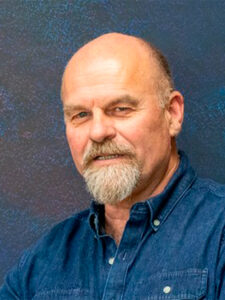
Kenneth Smith
Kenneth Smith is the Director of BACWTT. He studied at Emerson College, England, and completed his training in sculpture and the visual arts with practices in pedagogical and therapeutic work. After working in Waldorf education, he taught as Course Leader of the 3-year Visual Arts and Sculpture Training program at Emerson College. Since 2014 he has been the Director of BACWTT and in 2022 launched the Healing Arts training. He has been active internationally in Anthroposophical art and Waldorf education for over 30 years.
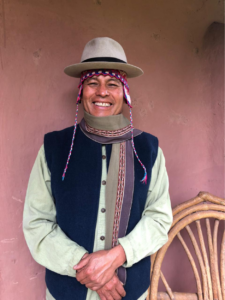
Roman Vizcarra
Roman Vizcarra, Quechua Nation of Peru, is a cultural visionary, artist and musician. Roman has a BFA in agriculture and is the Founder/CEO of the socially responsible travel company Kawsaypaq EIRL in the Sacred Valley of the Incas in Peru that works in sustainable tourism with the local people, land and culture in an authentic and empowering way. He is a licensed guide offering cultural immersion experiences through an Indigenous perspective. He is one of the founders of the Kusi Kawsay Association in Peru and is the coordinator of the Ñawpa Ñan cultural project. Roman has decades of experience in Andean Cosmo vision and cultural revitalization work, and serves as an advisor for many Indigenous cultural initiatives. He promotes and participates in Indigenous cultural exchanges, representing his Quechua Nation since his youth.